
When a Bathtub Becomes a Sculpture: Understanding Functional Art for Luxury Homes
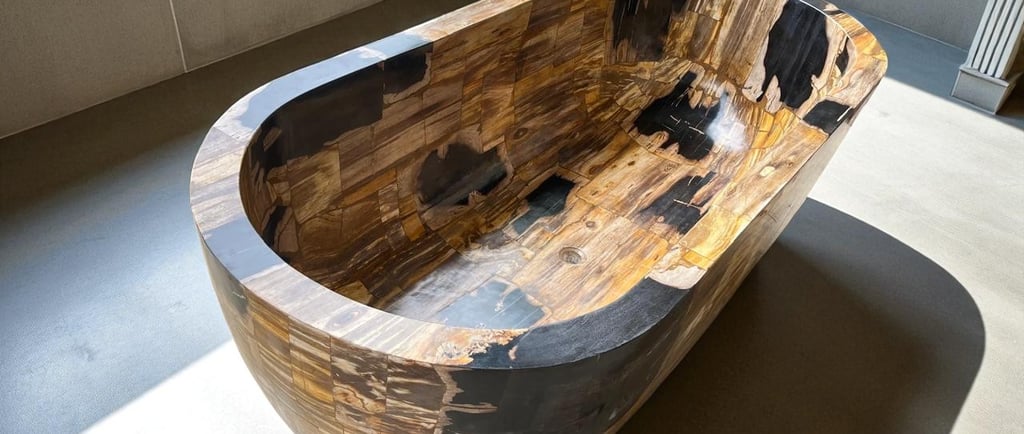
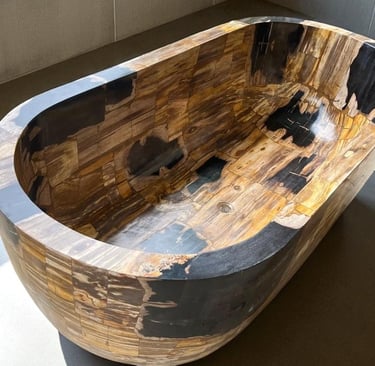
A petrified wood bathtub belongs firmly in that second category—a work of art that just happens to be the place where each day begins and ends.
1/22/20262 min read
What “functional art” really means
Functional art occupies a rare space between object and artwork: it must perform perfectly in daily use and yet be worthy of contemplation in its own right. In the bathroom, this might be expressed through a sculptural tub, a monolithic vanity, or a boldly veined stone wall that reads like a large‑scale painting.
With petrified wood, the artistic aspect is inherent to the material. Each slab displays unique patterns, mineral rivers, and color fields that can never be replicated, even within the same quarry. When carved into a bath, these qualities are amplified; in one glance, the piece can feel like a landscape, a cross‑section of Earth, and an abstract artwork all at once.
Why collectors and designers seek functional art
For high‑end homeowners and collectors, functional art solves a quiet problem: how to surround themselves with museum‑level pieces while still living comfortably with them every day. Rather than placing art only on walls or in vitrines, they allow it to become the objects they touch most often—dining tables, fireplaces, bathing vessels.
Designers appreciate how a sculptural tub instantly defines the mood of a primary suite or spa room. It becomes a natural focal point around which lighting, finishes, and sightlines are composed, reducing the need for excessive decoration elsewhere. The room feels complete even when visually restrained, because one extraordinary piece is doing the narrative heavy lifting.
How to integrate a sculptural bathtub into a home
A bathtub with this level of presence asks for breathing room. Designers often place it on axis with a window, a view, or a framed opening, ensuring that the first impression is clean and uninterrupted. Floors and walls are kept refined and calm—stone, plaster, or finely detailed wood—so the sculptural form can be clearly read.
Lighting is equally intentional. A combination of soft ambient light and one or two focused accent sources will highlight the stone’s depth without introducing glare. In the end, the measure of success is simple: even when the bath is empty, the room still feels complete, as if the tub were an artwork on permanent display.
Transforming ancient fossilized wood into the world's most exclusive luxury bathtubs and wellness sanctuaries.
Terms
Links
Contact
© 2025 RareBath by Neeom Industries Corp.. All rights reserved.

info@rarebath.com
+1 7727322842
+1 7RAREBATH2
233 S Wacker Dr, 44th Floor, Chicago IL 60606